
How to Find Affiliate Partners: The Four Types, Where Each One Lives, and How to Vet Them
 Mara Lindqvist Published on September 7, 2026 · in Account Risk
How to Find Affiliate Partners: The Four Types, Where Each One Lives, and How to Vet Them
"How do I find affiliate partners" is usually asked as a sourcing question — where are the lists, which directories are worth joining. But the reason most affiliate programs stall is not that the operator could not find anyone. It is that they went looking for "affiliates" as if that were one kind of person, recruited whoever answered, and ended up with a roster whose traffic they could not evaluate.
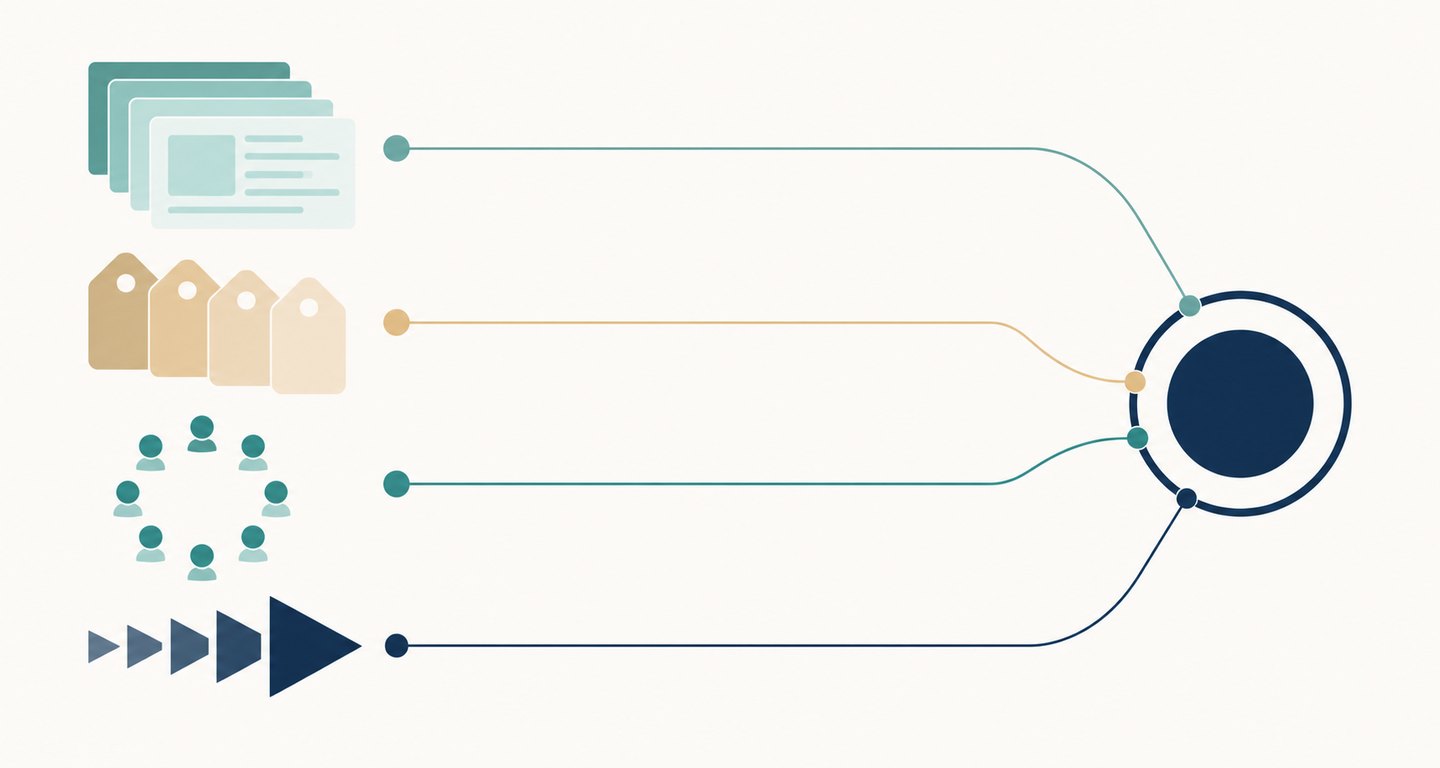
Affiliate partners come in at least four distinct shapes. They are found in different places, they are motivated by different things, they need different commission structures, and they carry very different risk. Getting the shape right first makes the sourcing question much smaller.
The four shapes
Content and review publishers. Blogs, comparison sites, YouTube channels, niche newsletters. They rank for or hold attention on purchase-intent queries and place your product inside an editorial recommendation. Slow to onboard, slow to produce, and the most durable of the four — a review that ranks keeps sending traffic for years. They care about whether your product is defensible to recommend, because their credibility is the asset.
Coupon, cashback, and deal sites. They intercept traffic that is already at the checkout stage, usually via a "search for a discount code" moment. Fast to onboard, immediate volume, and the shape most likely to be taking credit for conversions you would have got anyway. Not inherently bad — but their value depends entirely on your attribution setup, because last-click will systematically over-reward them.
Audience owners. Email lists, private communities, Discord and Telegram groups, individual creators with an engaged following. Volume is smaller and lumpier — a send or a post, then nothing. Conversion rates are often the highest of any shape, because the recommendation carries personal trust. They are also the most sensitive to how you treat them; a bad experience gets discussed with the audience.
Media-buying affiliates. They run paid traffic to your offer on their own budget and keep the margin. Potentially the largest volume, and the only shape that will scale on demand. Also the shape that concentrates compliance risk: their creatives, their claims, and their landing pages are attached to your brand while being outside your direct control. This overlaps with, but is not the same as, hiring a media buyer — how to find a media buying partner covers that adjacent relationship, where you own the budget and the risk.
Before sourcing anyone, decide which two of these four you actually want. Most programs cannot manage all four well at once, because the vetting, the commission logic, and the communication cadence are different for each.
Where each shape is actually found
Networks and marketplaces are the default first stop, and are best at coupon and content publishers. The tradeoff is real: you get volume of applications and handled tracking and payouts, in exchange for a fee, less direct relationship, and applicant quality you must filter yourself. Treat network applications as a top-of-funnel to be screened, not a roster.
Your own customers and traffic. The highest-converting affiliates are frequently people already using the product. Two mechanisms find them: a visible program page that your own site links to, and an outbound look at who is already sending you referral traffic without a formal arrangement. Check your referrer data before you buy a directory listing — unpaid mentions are a pre-qualified list, and the people behind them have already demonstrated they will recommend you.
Search, for content publishers. Search the queries you want to be recommended inside — "best X", "X alternatives", "X vs Y" — and the sites on page one are your target list, in priority order. This is slower and entirely manual, and it produces a far better roster than any directory, because you are selecting on the exact outcome you want rather than on willingness to be listed.
Communities and forums, for audience owners and media buyers. This is where the relationship-first shapes live, and where a cold pitch works least well. Affiliate marketing forums covers what these spaces do that chat groups cannot, and cross-border e-commerce networks covers how operators find each other in practice.
In-person events, for the top of the range. Expensive per contact and unbeatable for the partners who will not respond to cold email. Realistically an option once you know what a good partner is worth to you — trade shows and summits covers which format suits which goal.
Vetting: the four questions
Recruiting is the easy half. A roster of unvetted partners is worse than a small one, because bad partners cost money and, in the media-buying case, can cost you an advertising account.
Is the traffic real, and is it theirs? Ask for a traffic source breakdown before asking for numbers. A publisher who cannot say where their visitors come from either does not know or does not want to say. For content sites, check that the pages ranking are actually theirs and actually rank. For anyone claiming social reach, engagement ratios are more informative than follower counts.
Would this traffic have converted anyway? The question that matters for coupon and cashback partners specifically. If a partner's activity concentrates on your own brand terms and at the last click before checkout, they are capturing existing demand rather than creating it. That can still be worth paying for — but at a different rate than incremental traffic, and you should decide that deliberately rather than discover it in a quarterly review.
What are they going to say about the product? Applies most to media buyers. Ask to see the creatives and landing pages before approving. A partner making claims you would not make is a liability regardless of what they convert, and "the affiliate did it" has never been an effective defence with an ad platform or a regulator.
Do the economics work at the volume they are proposing? Commission that is comfortable at ten sales a month may not be at a thousand, once you account for returns, chargebacks, and support load. Model it at their proposed volume, not your current one.
Outreach that gets answered
Most affiliate outreach fails on the same three things: it is addressed to no one in particular, it leads with the commission rate, and it asks the recipient to do the work of figuring out the fit.
What works is narrow and specific. Reference the actual piece of their work that made you reach out. State plainly why your product fits their audience — and if you cannot state it in one sentence, that is a signal about the fit, not about the pitch. Say what the arrangement is, including the rate, without making the rate the headline. Then ask for one small, concrete next step.
Two things are worth saying explicitly because they are what experienced partners are actually screening for: what your conversion rate and average order value look like, and how attribution and cookie duration are handled. A partner deciding whether to spend their audience or their budget on you is trying to estimate their return. Volunteering the numbers is unusual enough to be a differentiator, and it filters out the partners for whom the fit genuinely is not there — which saves both sides time.
Structuring the arrangement
Commission shape matters more than commission rate. Flat percentage is simplest and fine for most content and audience partners. Tiered rates reward volume growth. Different rates for new versus returning customers directly address the incremental-value problem with coupon partners. A hybrid — smaller commission plus a flat fee for a specific placement — often works for audience owners whose value is a single send rather than continuous traffic.
Cookie window is a negotiation, not a constant. Long windows favour the partner and favour first-touch discovery, which is what content publishers do. Short windows favour you and favour last-touch, which is what coupon sites do. Setting one window for every shape guarantees you are mispricing at least one of them.
Payment terms are a recruiting variable. Net-30 with a low minimum threshold is materially more attractive than net-60 with a high one, and for smaller partners it can matter more than a few points of commission.
Write down what is not allowed. Bidding on your brand terms, claims that cannot be substantiated, specific traffic sources you will not accept. Do this at the start. Enforcing a rule you never wrote down is where affiliate relationships go wrong.
Common mistakes
- Recruiting for volume of partners. In most programs a small number of partners produce nearly all the revenue. Fifty inactive partners are administrative overhead, not a pipeline.
- Treating the first payout as the end of onboarding. The partners who produce are the ones who got help producing — assets, product access, someone to ask.
- Never auditing the roster. Traffic sources change, sites get sold, methods drift. A partner vetted a year ago has not been vetted.
- Letting last-click decide everything. If your only measurement is last-click attribution, you will systematically over-reward the shapes that sit closest to checkout and under-reward the ones that created the demand.
FAQ
Do I need a network to start? No. Direct relationships with a handful of well-chosen partners are a normal starting point and avoid network fees. Networks earn their keep when you need application volume, handled payouts across many jurisdictions, or tracking you do not want to build.
How many affiliate partners should I be aiming for? Aim at revenue concentration, not headcount. A program with five producing partners is in better shape than one with a hundred where three produce. Recruit until you have enough producing partners that losing one is survivable, then focus on making the existing ones more productive.
What commission rate is standard? It varies enough by category and margin structure that any single number would mislead. The useful approach is to work backwards from your own margin and target payback period, then check that the result is within range of what comparable products in your category offer — that comparison is easy to do and specific to you.
How do I tell an affiliate is sending low-quality traffic? Compare their conversion rate, return rate, and post-purchase behaviour against your baseline, not against each other. A partner converting far above baseline with far higher returns is usually capturing existing demand or mismatching expectations. Set up the ability to segment by partner before you need it.
Should I approve media-buying affiliates? It depends on how much creative control you need. They scale fastest and carry the most compliance risk, since their ads run under your brand and outside your approval flow. If you do work with them, require creative review before launch and audit periodically — the review is the entire risk control.
TrafficTalking is a community for cross-border operators, media buyers, and affiliate marketers. Partner sourcing works better as a standing activity within a network you are already part of than as a campaign run when the program needs filling.