
Affiliate Network Meaning: What It Is and How One Works, From Click to Payout
 Ethan Cole Published on September 24, 2026 · in Account Risk
An affiliate network is a company that sits between advertisers and the publishers who promote them. Advertisers list offers on it, publishers apply and get tracking links, and the network records each click and conversion, collects the commission from the advertiser and pays it out to the publisher. In short: one intermediary, one set of tracking, one payment relationship covering many brands.
That definition is accurate, but it hides the part that matters in practice: what the network actually does between a click and a payment. This guide walks through the parties involved, the life of a single conversion, how commissions are priced, and how the network itself is paid. If you are deciding between joining a network and working with a brand directly, read our comparison of affiliate network vs affiliate program after this.
Affiliate network meaning, in one paragraph
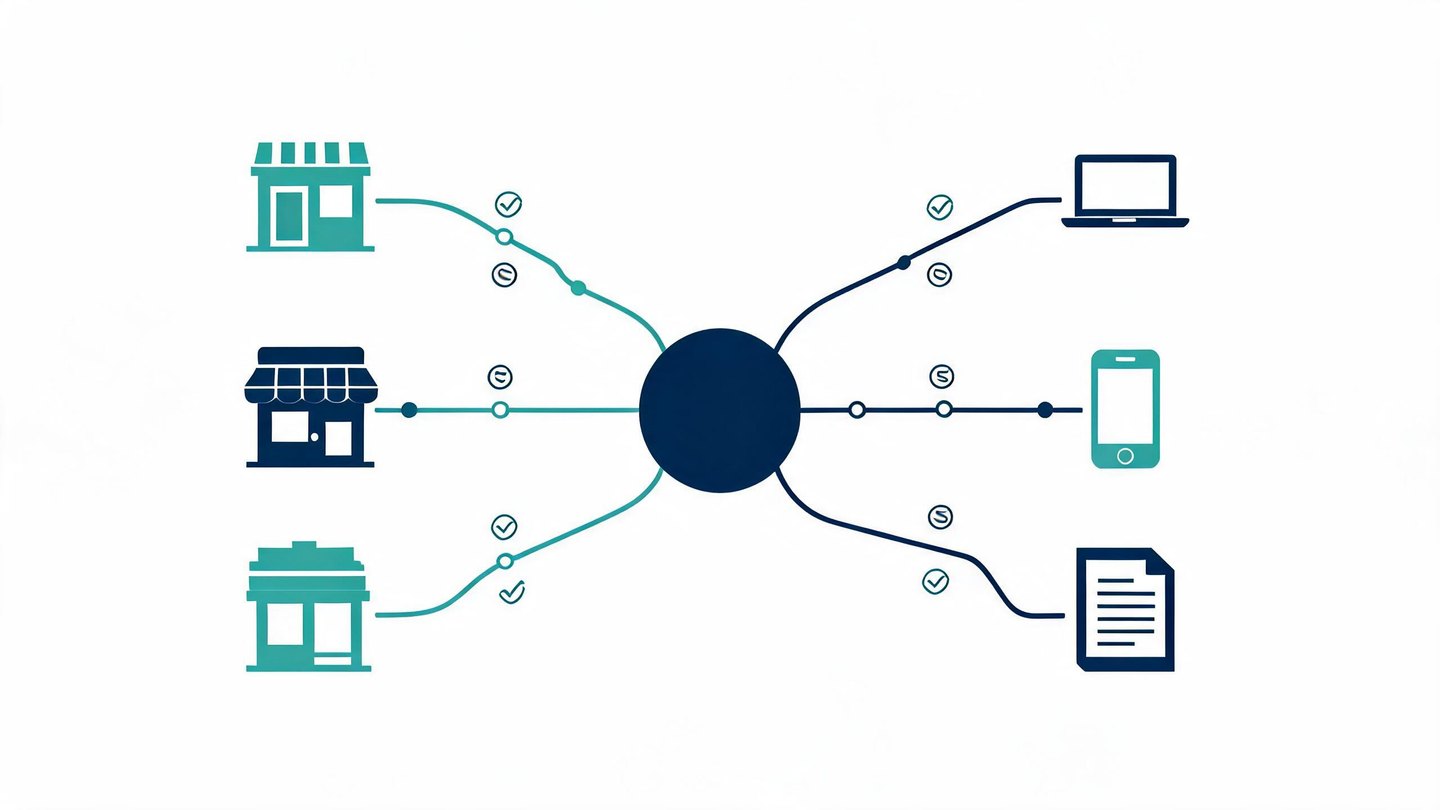
The word "network" is literal. On one side are advertisers (also called merchants or brands) who want sales, leads or installs. On the other are publishers (also called affiliates or partners): content sites, coupon sites, email lists, social creators and media buyers. The network connects the two sides through shared infrastructure, so that a publisher can promote dozens of advertisers without negotiating, integrating and invoicing each one separately, and an advertiser can reach many publishers without vetting and paying each one by hand.
Who is involved
- The advertiser sets the offer: what counts as a conversion, what it pays, which traffic sources are allowed, and which regions are in scope.
- The publisher sends traffic using the tracking link the network issues for that offer.
- The network hosts the offer catalogue, issues links, records clicks and conversions, handles reporting, and runs the payment flow in both directions.
- The end customer clicks, and later buys, signs up or installs. Their action is what everyone is being paid for.
Many networks also employ account managers on both sides. On the publisher side, their job is usually approvals, offer recommendations and resolving tracking disputes.
How an affiliate network works: the life of one conversion
Following a single sale from click to payment is the clearest way to understand the model.
- The click. A reader clicks your tracking link. The network's tracking system logs the click and assigns it an identifier, then redirects the reader to the advertiser's landing page.
- The conversion. The reader completes the defined action. The advertiser's site reports it back to the network, either through a tag on the confirmation page or through a server-to-server call (often called a postback) that carries the click identifier.
- Attribution. The network matches the conversion to your click using the rules of that offer, such as how long after the click a conversion still counts and what happens when more than one partner touched the customer.
- Pending. The commission now shows in your report, but it is not money yet. According to Awin's help documentation, tracked transactions stay pending until the advertiser reviews them, and the length of that review varies by advertiser.
- Validation. The advertiser approves or declines each transaction. Returns, cancellations, duplicates and traffic that broke the offer terms are the usual reasons for a decline.
- Collection and payout. The network invoices the advertiser, and once the advertiser has paid, the network pays the publisher on its own schedule. Awin's documentation, for example, marks an approved transaction as "uncleared" until the advertiser has paid Awin, and pays publishers only for approved transactions.
Steps four to six are where most confusion comes from. A conversion in your dashboard is a claim, not a balance. The gap between the two is the validation window plus the network's payment cycle.
How commissions are priced
The advertiser, not the network, usually decides what an action is worth. The common models are:
|
Model |
You are paid when |
Typical fit |
|---|---|---|
|
Cost per sale (CPS) or revenue share |
A purchase completes, usually as a percentage of order value |
Retail, subscriptions, travel |
|
Cost per lead (CPL) |
A form or sign-up meets the advertiser's quality rules |
Finance, education, B2B software |
|
Cost per action (CPA) |
A defined action happens, such as a trial start or a completed registration |
Apps, services |
|
Cost per install (CPI) |
A mobile app is installed and opened |
App marketing |
Each offer page spells out its own model, rate, allowed traffic sources and restrictions. Those terms, not the network's general marketing, decide what you will actually be paid for.
How the network itself makes money
Networks are paid by advertisers, not by publishers, in most mainstream models. The usual sources are a setup or platform fee, a monthly fee, and an override: an additional percentage charged on top of each commission paid to publishers. Some performance networks, particularly in app and lead generation, work differently: they agree one price with the advertiser and a lower price with publishers, and keep the difference.
This matters for publishers in one practical way. A network that earns only when validated commissions are paid out has an incentive to keep tracking accurate and chase advertisers who pay late. A network whose margin depends on buying traffic cheaply and reselling it has different incentives, and it is worth knowing which kind you are dealing with.
What a network does, and what it does not
A network gives you:
- One account for many advertisers, with one dashboard and one payment threshold.
- Tracking you do not have to build, and a neutral party when a conversion is disputed.
- Offer discovery, through a searchable catalogue.
- Some screening of both sides. Networks review publisher applications and usually monitor traffic quality, and advertisers apply to be listed.
A network does not:
- Ensure the advertiser approves your conversions. Validation is the advertiser's decision under the offer terms.
- Make an offer's rules optional. Traffic sources, brand-bidding rules and regional limits apply exactly as written.
- Take on your legal duties. The US Federal Trade Commission's guidance on endorsements says affiliate relationships should be disclosed clearly and close to the recommendation, whether the commission comes from a network or directly from a brand.
Affiliate network vs ad network
The two terms are often mixed up. An ad network places ads on a publisher's pages and usually pays on impressions or clicks. An affiliate network pays only when an action is completed on the advertiser's side. The skills, content and traffic you need for each are different. If you want to see the main categories of affiliate networks and how to choose between them, see our affiliate networks list.
How to read a network before you join
- Payment terms: threshold, payment frequency, supported methods and currencies.
- Validation behaviour: how long advertisers in your vertical typically take to approve, and what the decline reasons look like.
- Tracking method: whether offers support server-to-server postbacks, which are harder to lose than browser-based tracking.
- Offer terms: allowed traffic sources, and what happens to commissions from traffic that breaks them.
- Support: whether you get a named account manager, and how disputes are handled.
Other publishers' first-hand experience is often the fastest way to answer these. Our guide on how to find affiliate partners covers where those conversations happen and how to judge what you hear.
FAQ
What does affiliate network mean in simple terms?
It is a middleman that connects brands with the people who promote them. It tracks who sent each sale or lead, collects the commission from the brand and pays the promoter.
Is an affiliate network the same as affiliate marketing?
No. Affiliate marketing is the practice of being paid for the customers you refer. An affiliate network is one piece of infrastructure used to run it. Many brands run affiliate programs without any network.
Do publishers pay to join an affiliate network?
In most mainstream networks, no; the advertiser pays the network. Some networks ask for a small refundable deposit or charge fees on specific payout methods, so read the terms before you sign up.
Why is my commission still pending?
Because the advertiser has not finished validating it. Pending commissions become payable only after the advertiser approves them and, on many networks, after the advertiser has paid the network.
The short version
An affiliate network is the tracking, the catalogue and the payment pipe between many advertisers and many publishers. Understanding the path from click to pending to validated to paid explains most of what happens to your commissions. If you want to compare notes with people who work with networks every day, the TrafficTalking community is one place to ask.